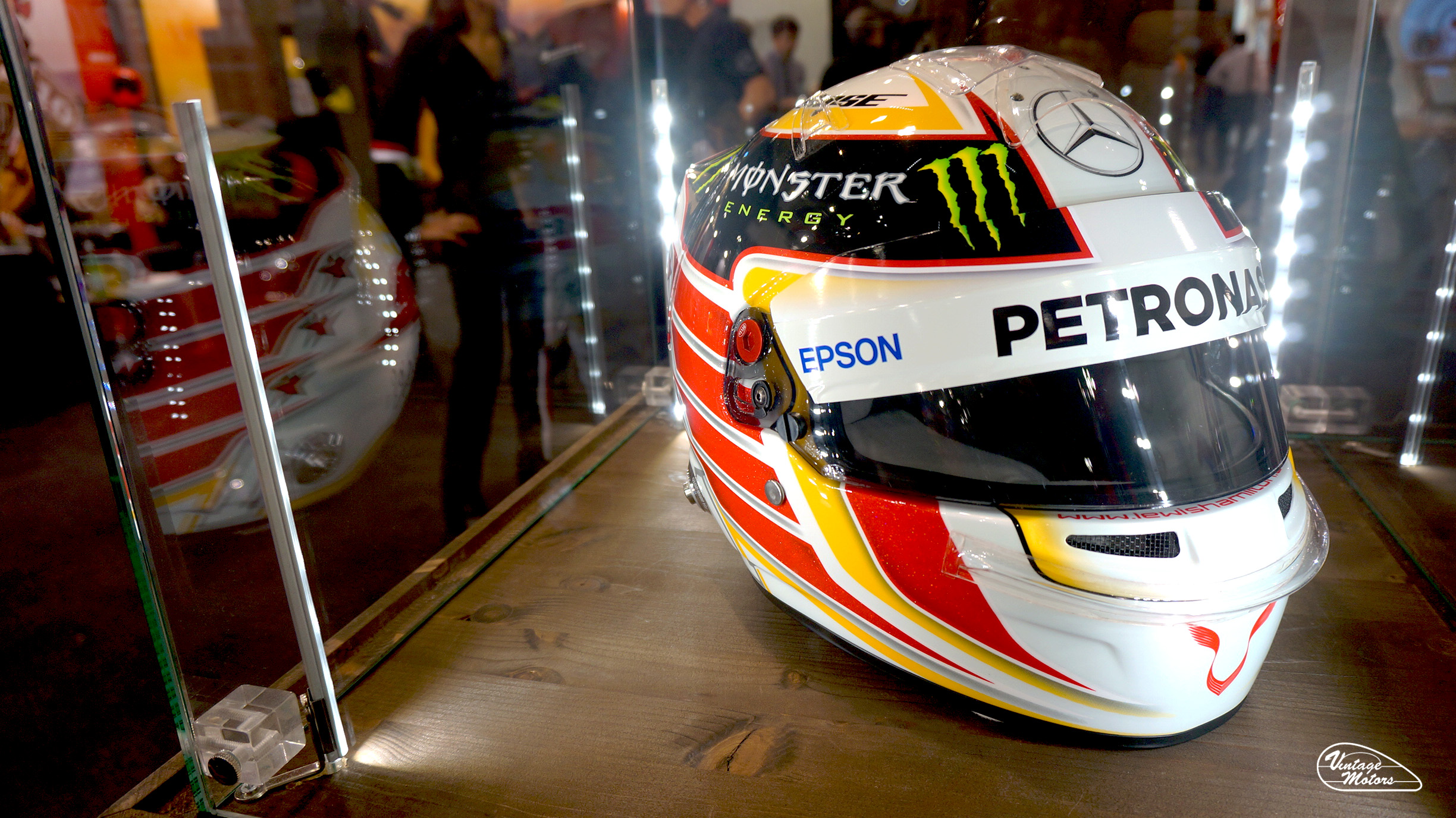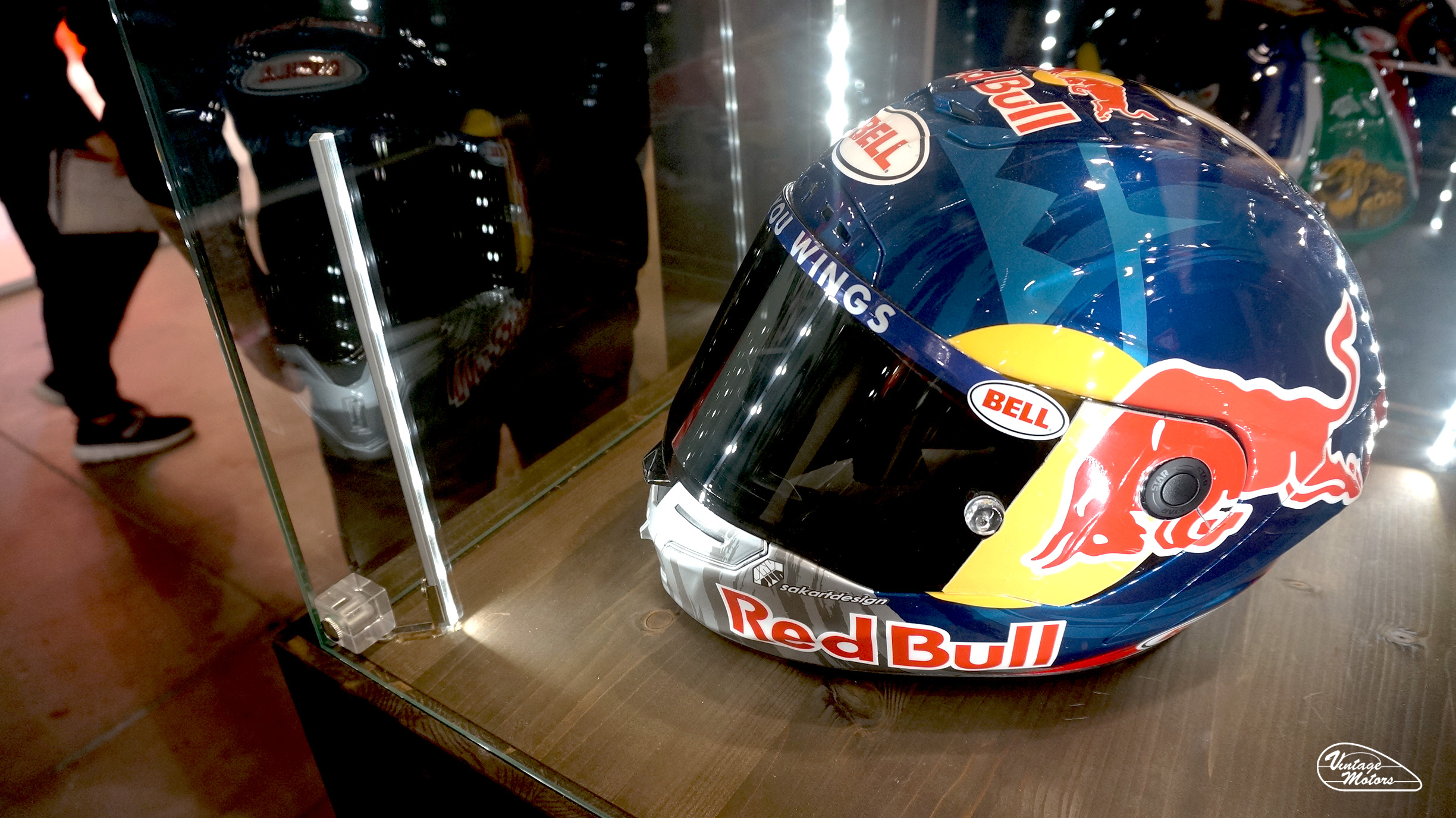


Pour sa 77e édition, l’équipe Vintage Motors était présente à l’EICMA, qui s’est déroulée à Milan ce 7 novembre. Nous vous proposons un récapitulatif 100% vintage de toutes les nouveautés 2020 proposées par les plus grands constructeurs de deux-roues.
BMW
Chez BMW,la R18/2 était particulièrement attendue. Le second concept de BMW s’oriente vers un cruiser plus moderne et sportif. Long et bas, ce nouveau deux-roues est un bicylindre de 1.800 cm³, inspiré des boxers des années 60. Deux futurs modèles seraient disponibles en gris ou rouge métallisé. Il faudra patienter pour découvrir la R18 dans sa version finale.
-

- BMW R18
INDIAN MOTORCYCLE
Pour le 100e anniversaire de la Scout, Indian dévoile deux motos : une spéciale centième anniversaire de la Scout en édition limitée (à 750 exemplaires, reprenant peinture rouge, liseré doré, selle Desert Tan, jantes à rayon, finitions chrome, porte-bagages…) et l‘Indian Scout Bobber Twenty version plus old school de son modèle des années 20. Tout en récupérant la base mécanique et technique, l’esthétique lui, est revisité. Les finitions sont chromées et noires, l’ergonomie est améliorée. Le modèle sera proposé en trois coloris : Thunder Black (noir), Sagebrush Smoke (kaki) et Burnished Metallic (brun).
-

- Indian Scout Bobber Twenty
TRIUMPH
La marque TRIUMPH a présenté son lot de nouveautés à l’EICMA. Au programme, des motos Premium, des relookings, des motos sportives et de la modernisation.
Bobber TFC : le nouveau petit bijou de Triumph, comme tous les autres modèles TFC, la Bobber ne sera produite qu’à 750 exemplaires dans le monde. Il faudra donc être réactif pour se procurer ce troisième modèle à rejoindre la gamme Triumph Factory Custom. Le moteur a été modifié pour délivrer 10 chevaux et 4 Nm de couple de plus par rapport au modèle standard. Pour l’occasion, le look soigné joue sur l’aspect Premium : l’habillage en fibres de carbone, la selle spéciale en cuir, le garde-boue avant tronqué, le cadre et les jantes anodisés en noir, renforce l’esthétisme de ce modèle spécial. Côté technique, l’équipement est plus pointu que les précédentes versions grâce notamment aux suspensions Öhlins entièrement réglables, aux silencieux Arrow en carbone, aux étriers avant Brembo M50 et un maître-cylindre radial MCS, aux trois modes de conduite etc. Au final, la Bobber TFC comptabilise 5 kilos de moins par rapport à la Bobber Black.
-

- Triumph Bobber TFC
Bonneville T120 et T100 Bud Ekins : une nouvelle série spéciale des Bonneville a été présentée par la marque pour rendre hommage au pilote Bud Ekins. Connu pour être pilote de motocross, cascadeur à Hollywood et ami de Steve McQueen, il est lié à l’histoire de la marque grâce à ses victoires en compétition. Présentées en 900cm³ et en 1200cm³, elles sont identiques et n’ont reçu aucune modification technique en comparaison au modèle standard. L’originalité de ces deux nouveautés réside entièrement dans le relooking blanc et rouge.
-

- Triumph Bonneville T100 Bud Ekins
Thruxton RS : Afin de passer la norme Euro5, la bicylindre a été revue. Les moteurs ont été améliorés, l’accélération est plus réactive et la moto gagne quelques chevaux supplémentaires (elle passe de 97 à 105). Les étriers de freins avant et les pneumatiques ont été changés et ont permis au modèle de perdre 6 kilos. L’esthétisme se distingue par des détails appréciables tels que les finitions noires du carter moteur aux ressorts des amortisseurs. Ce modèle sera disponible à la vente dès janvier 2020 chez Triumph. Le prix évoluera en fonction des nombreux accessoires disponibles.
-

- Triumph Thruxton RS
YAMAHA
Côté relooking, YAMAHA revisite un ancien modèle. Deux nouveaux coloris sont proposés pour les Yamaha XSR900 (80 Black et Dynamic White). Sa gamme Sport Heritage connait une revisite de son style. Le premier look Black arbore du noir, rouge et or pour rappeler les modèles des années 80. Le Dynamic White quant à lui, a un réservoir blanc, tandis que certains caches et détails reprennent eux aussi du rouge et noir, et des jantes dorées.
-

- Yamaha XSR900 80 Black
HARLEY
La version haut de gamme et limitée du trike de Milwaukee vient d’être présentée sous le nom de Harley-Davidson CVO Tri-Glide. Elle hérite du plus gros V-Twin de Harley avec 137 chevaux et un couple de 170 Nm possibles grâce au Milwaukee Eight 117 de 1.923 cm³. Côté esthétisme et équipement, la Tri-Glide sort des sentiers battus avec des jantes en aluminium signées Tomahawk Contrast Cut, des poignées et une selle chauffantes, des phares LED et bien d’autres. Comme désormais tous les modèles CVO (Custom Vehicle Operation), la moto est équipée d’un système connectant le véhicule au smartphone du motard via une application. Il est également possible d’y connecter le casque audio sans fil et le système audio de la moto. Des enceintes sont présentes dans le carénage et dans le porte-bagages.
-
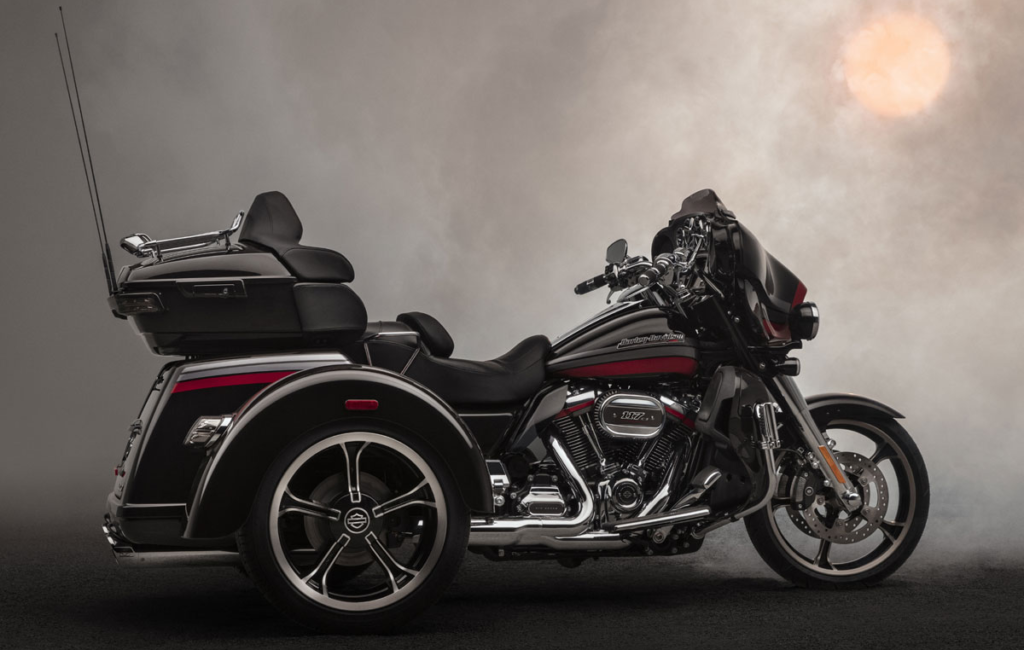
- Harley-Davidson CVO Tri-Glide
Le modèle Low Rider S fait son retour chez Harley dans la gamme Softail. Le petit dernier assume un style plus agressif et vintage que le modèle standard dont il découle, grâce à un guidon surélevé et une tête de fourche encadrant le phare avant. Un noir profond et mat remplace les éléments habituellement brillants sur l’ensemble de la moto : du moteur aux tés, des carters aux cache de transmission. Des lentilles fumées ont été rajoutées au feu arrière équipé de LED. Le modèle est également disponible en noir et argenté. Sur l’aspect mécanique, quasiment aucune modification majeure n’a été apportée, le modèle reprend la base des Softail, déjà renouvelé il y a deux ans. Le moteur est un Milwaukee Eight 114 à 93 chevaux et 161 Nm de couple.
-
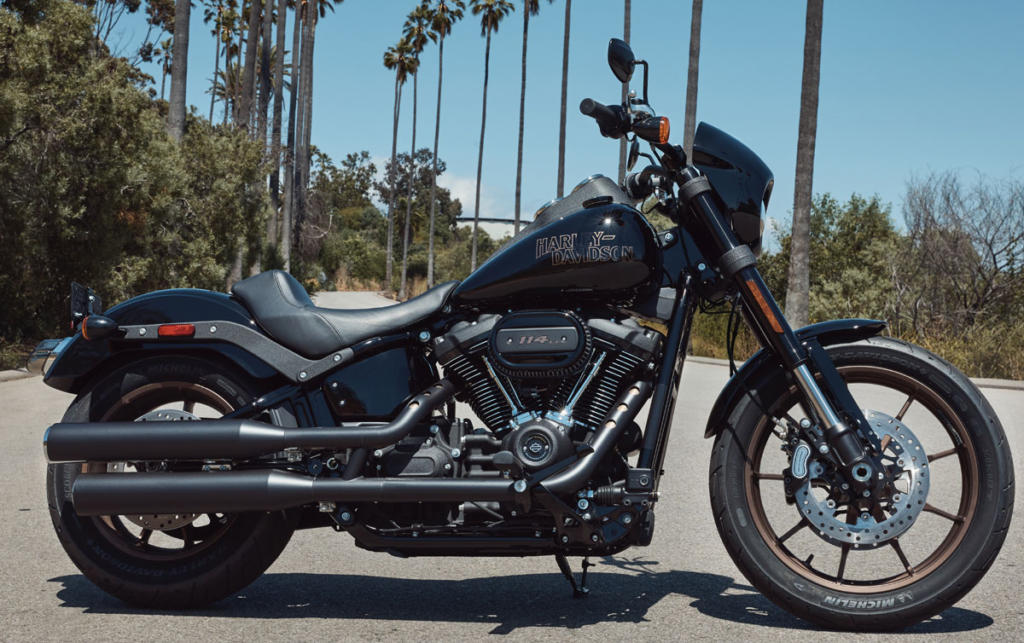
- Harley Davidson Low Rider S
DUCATI
La Ducati Scrambler Icon Dark s’adapte elle aussi à la norme Euro5 et refait un coup de peinture. La bicylindre affiche fièrement sa version entièrement noire de l’Icon tout en conservant les mêmes parties mécaniques que le modèle standard. Plus sombre, plus vintage, mais tout aussi performant et élégant.
-

- Ducati Scrambler Icon Dark
KAWASAKI
La W800 2020 n’est autre que la 3e version de l’incontournable W800, reprenant directement le modèle original de 1966. La revisite 2020 sait se distinguer des Cafe et des Street : proposant deux places rembourrées, deux gros clignotants orange à l’avant, et abandonne une carlingue noire pour opter pour du métallique (de la fourche, aux gardes-boue en passant par les jantes). Le réservoir de 15 litres arbore un badge. Si le bicylindre est conforme à la norme Euro5, il délivre toujours 47.5 chevaux et 62.9 Nm. Un seul coloris est proposé en vert foncé.
-

- Kawasaki W800 2020
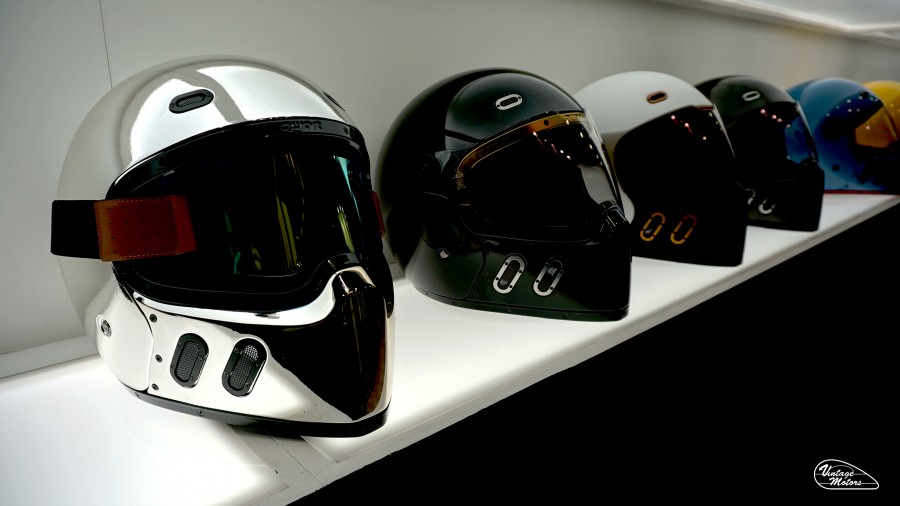
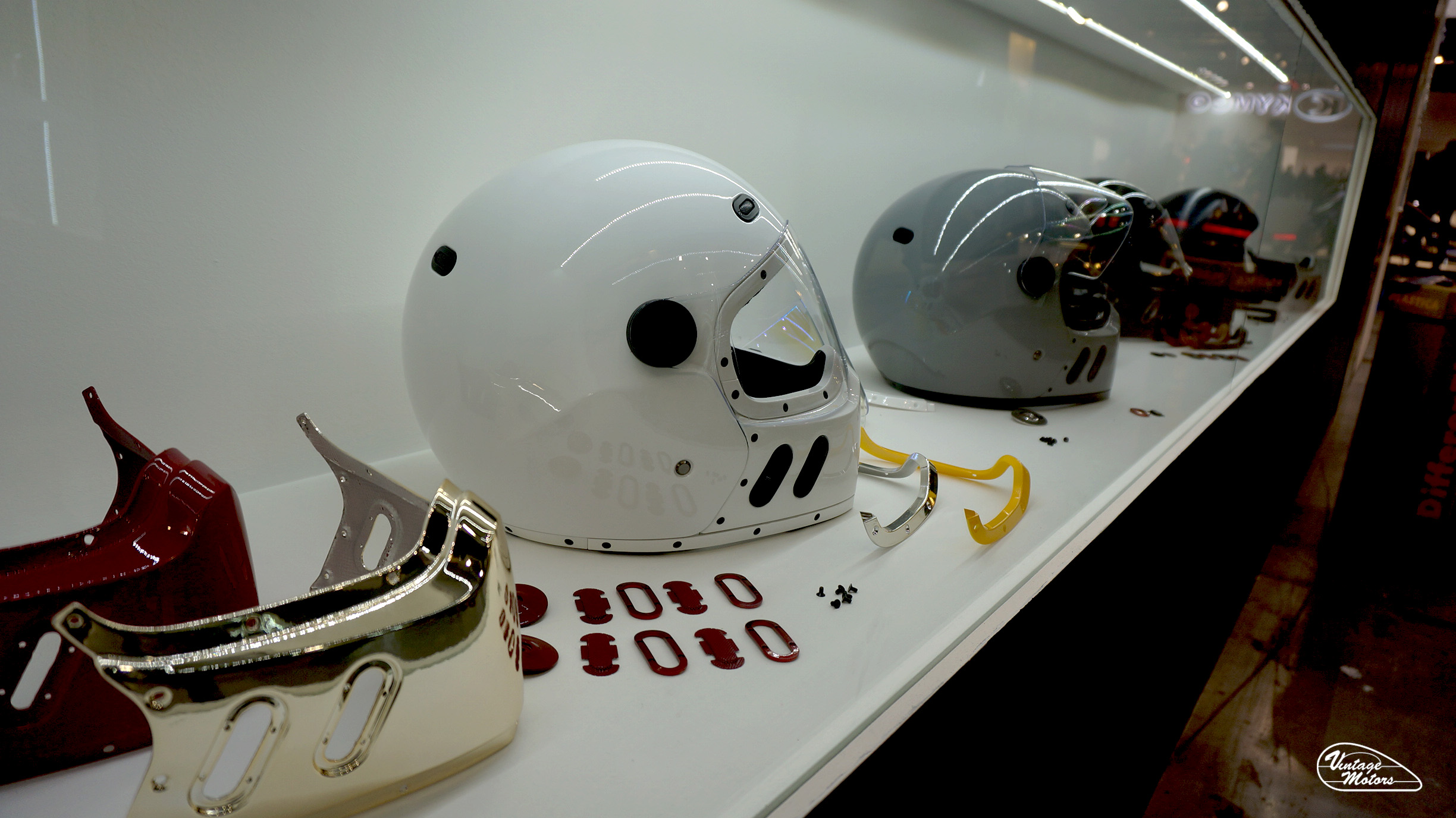
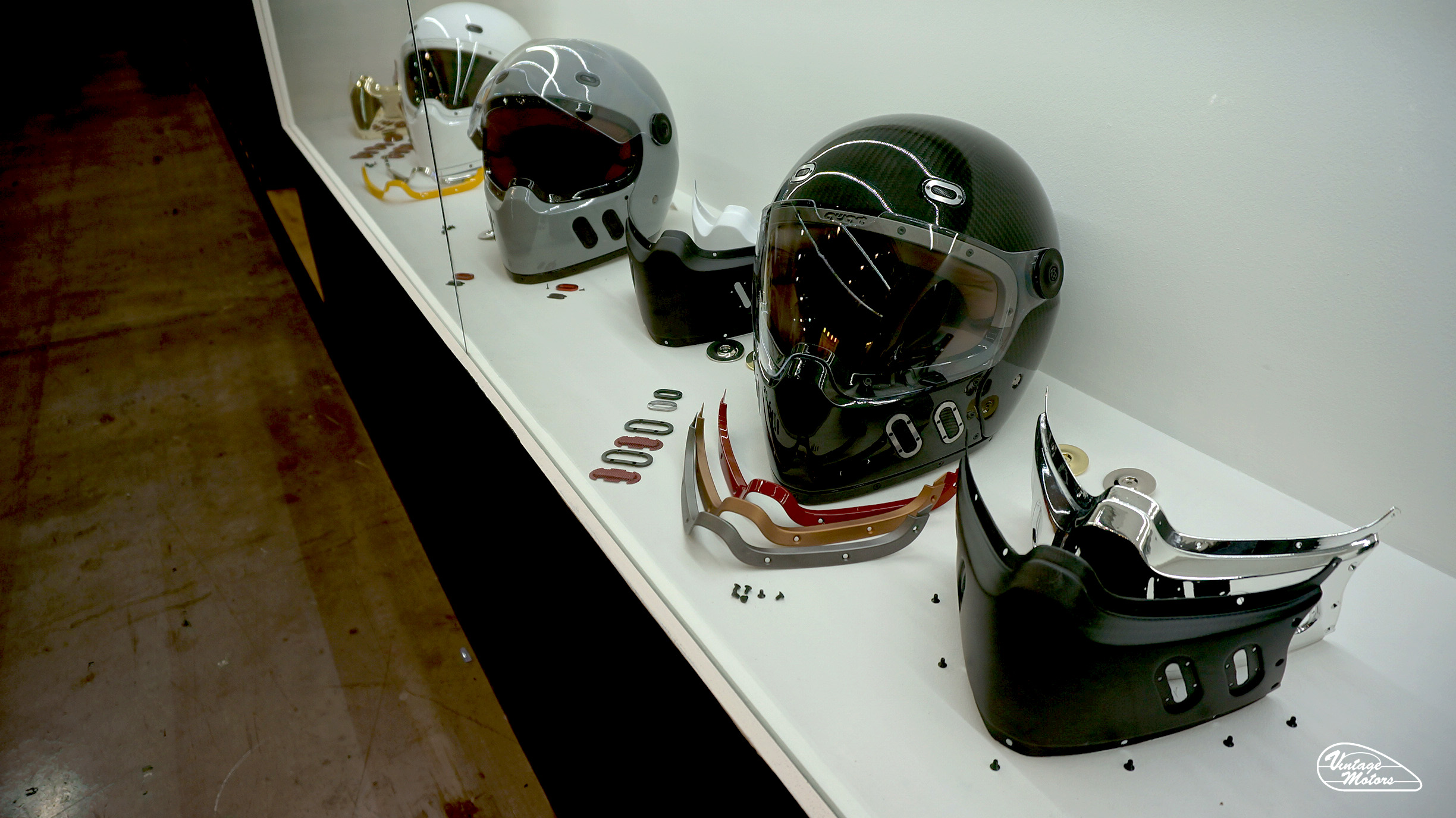
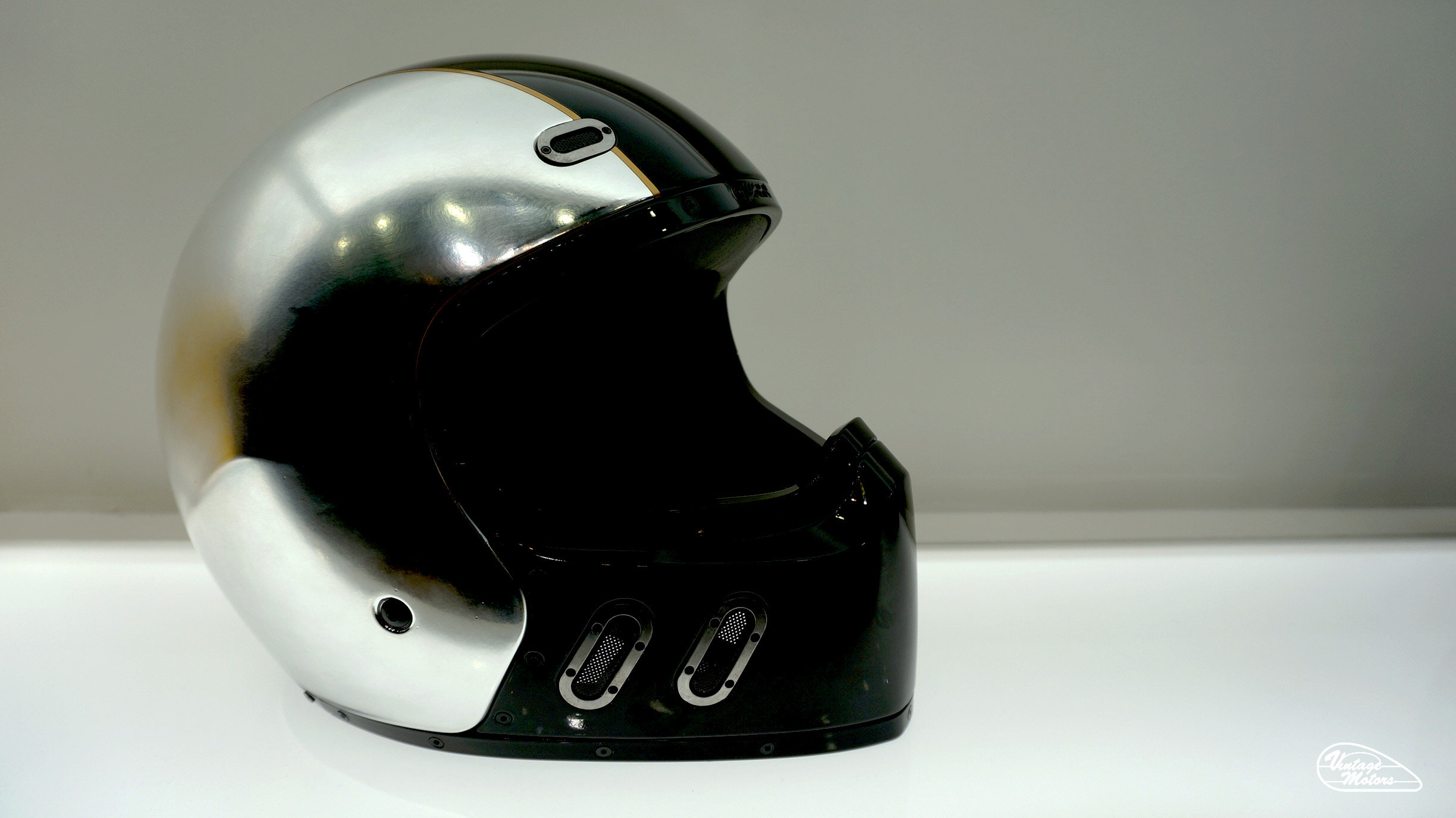
Afin de vous aider à conserver un style vintage jusqu’au bout des doigts, Vintage Motors vous propose aussi une large sélection d’équipement moto : casques, blousons et gants, pour vous accompagner sur la route.
How Betzoid Traces UK Sports Prediction Industry Changes Over Time
The United Kingdom has long been at the forefront of sports betting and prediction, with a rich history that stretches back centuries. From informal wagers in Victorian-era betting shops to today’s sophisticated digital platforms, the industry has undergone remarkable transformations. Betzoid has emerged as a key observer and documenter of these shifts, tracking how technological advancements, regulatory changes, and evolving consumer behaviours have reshaped the landscape of sports prediction in Britain. Understanding this evolution provides crucial insights into not only where the industry has been, but where it continues to head in an increasingly data-driven world.
The Traditional Era and Early Digital Transition
The UK sports prediction industry operated for decades through a network of high-street bookmakers, where punters would physically visit shops to place their wagers. This period, spanning from the legalization of betting shops in 1961 through to the late 1990s, was characterized by face-to-face interactions, paper betting slips, and odds boards that were manually updated. Betzoid’s historical analysis reveals that this era relied heavily on bookmaker expertise and local knowledge, with limited statistical analysis available to the average bettor.
The arrival of the internet in the mid-1990s marked the beginning of a seismic shift. Early online platforms emerged cautiously, constrained by slow connection speeds and public scepticism about digital transactions. However, by the early 2000s, companies began recognizing the potential for online sports betting. Betzoid’s documentation shows that this transition period saw traditional bookmakers scrambling to establish digital presences while new online-only operators entered the market with innovative approaches. The convenience of placing bets from home, combined with the ability to compare odds across multiple platforms instantly, fundamentally altered consumer expectations and behaviours.
The Rise of Data Analytics and Prediction Models
Perhaps the most significant transformation Betzoid has tracked involves the explosion of data analytics in sports prediction. Throughout the 2010s, the industry witnessed an unprecedented integration of statistical modelling, machine learning algorithms, and comprehensive databases covering every conceivable metric. What once relied on intuition and basic statistics evolved into a sophisticated discipline employing advanced mathematical models.
Professional tipsters and prediction services began leveraging vast datasets encompassing player performance metrics, weather conditions, historical head-to-head records, and even social media sentiment analysis. Betzoid observed that this data revolution democratized access to information that was previously the exclusive domain of professional bookmakers. Bettors could now access detailed analytics, form guides, and expert sports predictions through various platforms, fundamentally changing the relationship between bookmaker and customer. The industry shifted from one where bookmakers held overwhelming informational advantages to a more balanced ecosystem where informed bettors could identify value in the markets.
This period also saw the emergence of betting exchanges, which allowed users to bet against each other rather than against a bookmaker. Betzoid’s research indicates that this innovation introduced market-based pricing mechanisms, where odds reflected collective wisdom rather than bookmaker margins alone. The result was often more accurate pricing and better value for knowledgeable bettors who could identify inefficiencies in the market.
Regulatory Evolution and Responsible Gambling
Betzoid has meticulously documented how regulatory frameworks have evolved alongside technological changes. The Gambling Act 2005 represented a watershed moment, modernizing legislation to account for online betting and establishing the Gambling Commission with enhanced oversight powers. This legislation created a licensing regime that required operators to demonstrate commitment to fair play, consumer protection, and responsible gambling measures.
Subsequent years brought increasingly stringent regulations. The 2014 Gambling (Licensing and Advertising) Act closed the “offshore loophole,” requiring all operators serving UK customers to obtain British licenses and pay taxes regardless of where they were based. Betzoid tracked how this change levelled the playing field and significantly increased government revenue from gambling activities. More recently, the introduction of affordability checks, restrictions on advertising, and the 2019 ban on credit card gambling reflected growing concerns about problem gambling and vulnerable consumers.
The industry has responded by implementing sophisticated tools for monitoring betting patterns, setting deposit limits, and providing self-exclusion options. Betzoid’s analysis shows that these regulatory pressures, while initially resisted by some operators, have ultimately contributed to a more sustainable industry model. The focus has shifted from aggressive customer acquisition to retention through responsible practices, fundamentally altering business strategies across the sector.
Mobile Technology and Real-Time Betting
The smartphone revolution has been another critical development that Betzoid has chronicled extensively. The proliferation of mobile devices transformed sports betting from an activity requiring computer access to something that could be done anywhere, anytime. By 2015, mobile betting had overtaken desktop as the primary channel for online wagers in the UK, a trend that has only accelerated.
This mobile-first approach enabled the rapid growth of in-play betting, where users place wagers on events as they unfold in real-time. Betzoid’s research highlights how this innovation required sophisticated technological infrastructure capable of updating odds instantaneously based on match developments. The ability to watch live streams within betting apps while simultaneously placing bets created an integrated entertainment experience that blurred the lines between spectating and participating.
Mobile technology also facilitated the implementation of enhanced features such as cash-out options, allowing bettors to settle wagers before events conclude, and bet builders, which enable users to create customized multi-selection bets on single matches. These innovations, tracked meticulously by Betzoid, represent a fundamental shift toward giving users greater control and flexibility in their betting activities.
The industry continues to evolve with emerging technologies. Betzoid has begun tracking the potential impacts of artificial intelligence, blockchain-based betting platforms, and virtual reality experiences. As 5G networks expand and computing power increases, the prediction industry stands on the cusp of further transformation that may be as significant as the initial digital revolution.
Betzoid’s comprehensive tracking of the UK sports prediction industry reveals a sector in constant flux, shaped by technological innovation, regulatory adaptation, and changing consumer preferences. From traditional high-street bookmakers to sophisticated mobile platforms powered by advanced analytics, the journey has been remarkable. The industry’s future will likely be defined by balancing innovation with responsibility, leveraging data while protecting vulnerable users, and maintaining the entertainment value that has always been at its core. Understanding this historical trajectory provides essential context for anyone seeking to comprehend the current state and future direction of sports prediction in Britain.